

My $10K Camera Car Setup: A Full Breakdown
Since the beginning of my videography journey, I’ve always wanted to merge my passion for filmmaking with my love for cars. I dreamed of capturing shots that are nearly impossible to get handheld. After years of saving, planning, and picturing this setup in my head, I finally built a rig that lets me capture truly cinematic rolling footage—safely, reliably, and the way I always imagined.
This complete setup cost me around $10,000 to build. It’s a big investment, but one that’s already opened doors to so many opportunities. And sure, someone could hang out the back of a car with a $500 setup and get similar shots—but not safely, not consistently, and definitely not at this level of stability and control.
Let’s break down the biggest pieces of the puzzle.
1. The Car
2005 Chevrolet Corvette (C6)
At the core of this setup is my 2005 C6 Corvette. It’s been modified and tuned to around 400 wheel horsepower, and the adjustable suspension dampening allows me to dial in the feel depending on the road conditions.
Because of the car’s ride height and the nature of the rig, this is strictly a road-only filming setup—no off-roading here. The Corvette is also equipped with a white and amber light bar to alert other drivers during shoots on public roads to maintain maximum safety.
Modifications include:
BTR Stage 2 cam
LG long-tube headers
Corsa Extreme exhaust
Silvers Neomax coilovers
BC Forged wheels
Aftermarket steering wheel and stereo
Morimoto headlights & taillights
Wide-body rear fenders
Callaway aftermarket intake
2. Camera Mount + Gimbal
Tilta Hydra Alien Pro – $3,000
DJI RS2 – $500
If you’ve got a car and a camera, this combo is where the “movie magic” happens. Together, they let me capture smooth rolling shots while maintaining full wireless control from the front seat.
The Tilta Hydra Alien Pro is the heart of the whole system. With its electronic suction cups, adjustable plates, and tunable dampening, I can mount it almost anywhere on the vehicle depending on the shot—typically the rear for rollers, or the front for chase shots. It absorbs vibrations extremely well and keeps the camera isolated from road shock.
The DJI RS2 may be an older gimbal, but it still has the power I need. After years of use, the RS2 motors are showing their age, especially under extreme lateral forces at speed. It’s controlled wirelessly through the Ronin app using an Xbox controller connected to a dedicated iPhone. It works well—when the signal holds. This is actually the most tedious part. Strong interference can cause the phone to disconnect from the gimbal, which means I instantly lose control. A better option would be Tilta’s remote control kit for the gimbal, which I plan to purchase and use in the future.
3. Camera Setup
Sony FX30 + 18–105mm f/4 - $2000
Sony FX3 + 24–70mm f/2.8 - $7000
Sony is my camera of choice, though this setup can accommodate other lightweight mirrorless systems as well.
For shots that require remote zooming, I use the FX30 with the 18–105mm power zoom lens. This eliminates the need for a separate motorized follow-focus or zoom system. Once I add a follow-focus motor, I’ll be able to use the FX3 with the 24–70mm lens much more freely. I can still use the 24–70mm, but without remote zoom control, the focal length is fixed and has to be adjusted manually, which limits flexibility.
That said, the FX3 with the 24–70mm really shines during night shoots. It’s a low-light beast, so even though I lose remote zoom capabilities, I compensate by choosing a simple focal length and cropping in post when needed. The clean low-light performance makes it more than worth the trade-off.
4. Miscellaneous Gear
Atomos Shinobi monitor - $300
V-mount batteries - $300
Rode Wireless Pro - $300
The Shinobi is the simplest part of the setup: a reliable monitor so I can see what the camera sees. I run everything through a long HDMI cable routed from the passenger seat to the rear of the car. It works—but it’s annoying. The cable has to be pinched through the trunk (carefully), and I’ve had several moments where I forgot to route it and had to tear the whole rig down and rebuild it. A wireless transmitter system would be cleaner, but at around $700… I haven’t justified it yet. Maybe I’m cheap. Or maybe I’ve just spent enough money already.
Power is a major part of this setup. The Hydra arm and the gimbal require consistent, stable power, so I run both through V-mount batteries. I also power the camera through the same system to keep it running the entire shoot without worrying about battery changes.
For audio, I usually place a Rode Wireless Pro mic somewhere on the rear of the car I’m filming—if the owner allows it. Some people are extremely protective of their paint, which I totally understand. I used to be the same way… until I started mounting gear all over my Corvette. Now the paint is in the worst condition it’s ever been. Oh well—guess that’s another hidden cost of this setup: your paint will suffer.
With 32-bit float recording, the Rode Wireless Pro handles the insane dynamic range of modified exhausts without clipping, which makes it perfect for capturing clean, aggressive engine audio.
Final Thoughts
This setup gives me the ability to produce cinematic shots safely and consistently—shots that would be very hard to pull off with any other method.
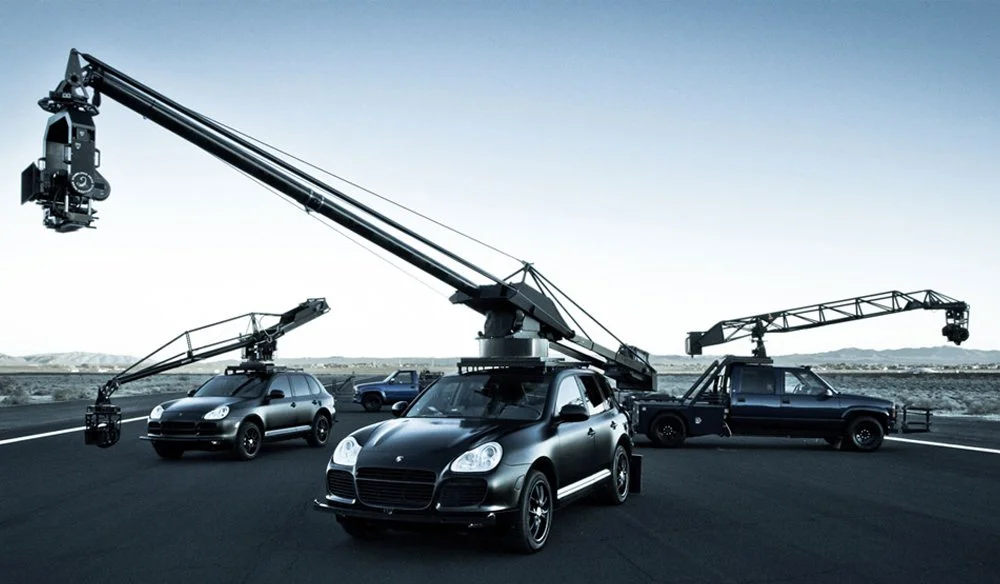
A true Hollywood-level camera car rig can cost $150,000 to $500,000+, so having my entire system dialed in for $10,000 feels like a win. At the end of the day, videography is still a hobby for me—one that’s turned into something valuable enough that people trust me to capture their vision.
Could someone get similar shots for cheaper? Absolutely. But cheaper comes with caveats:
Hanging out the back of a moving car is unsafe and unprofessional
Handheld shooting means unstable, less controlled footage
No remote control or stabilization tuning
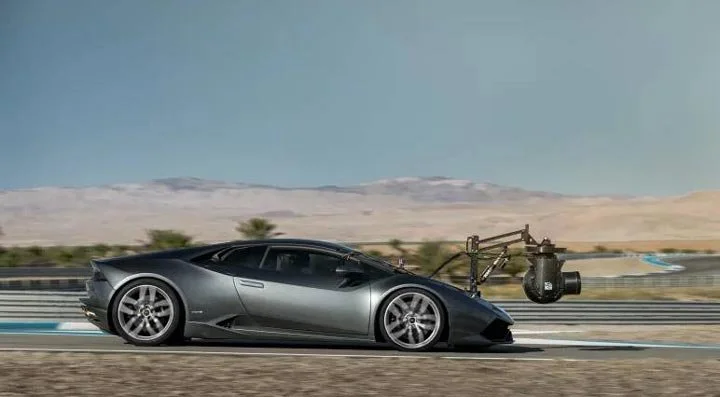
This right here is the “Huracam”—a Lamborghini Huracán converted into a full-blown camera car. It’s an absolute beast of a setup and was actually used to film some of the shots in the F1 movie.
I break down how I was able to achieve similar shots on a track using my setup in this blog post here (blog coming soon).