
The Shoot That Forced Me To Grow
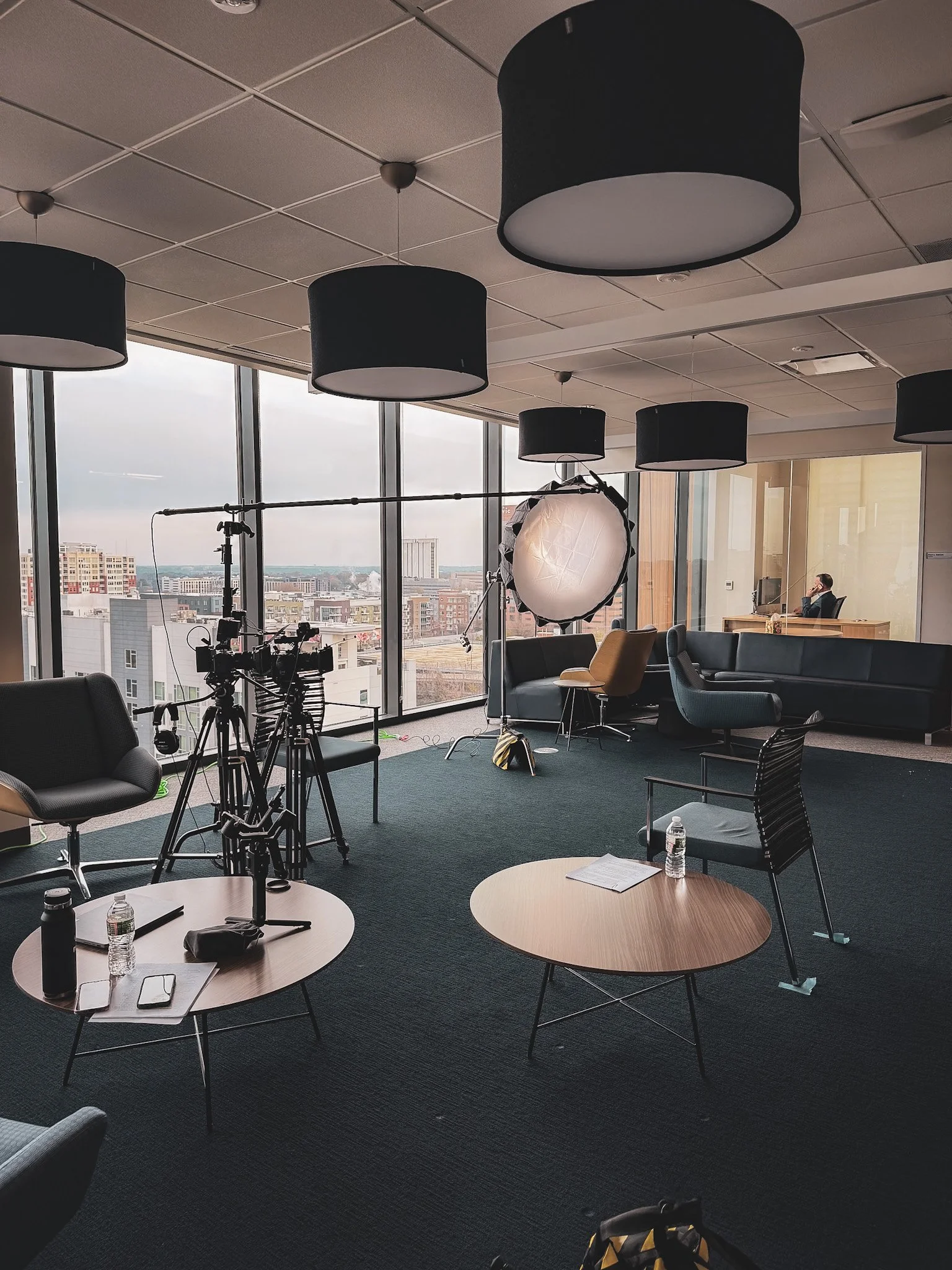
This corporate interview video was filmed in Raleigh, NC for a marketing team working with executive leadership. The production involved a multi-camera interview setup, controlled lighting, and long-form recording across multiple interviews.
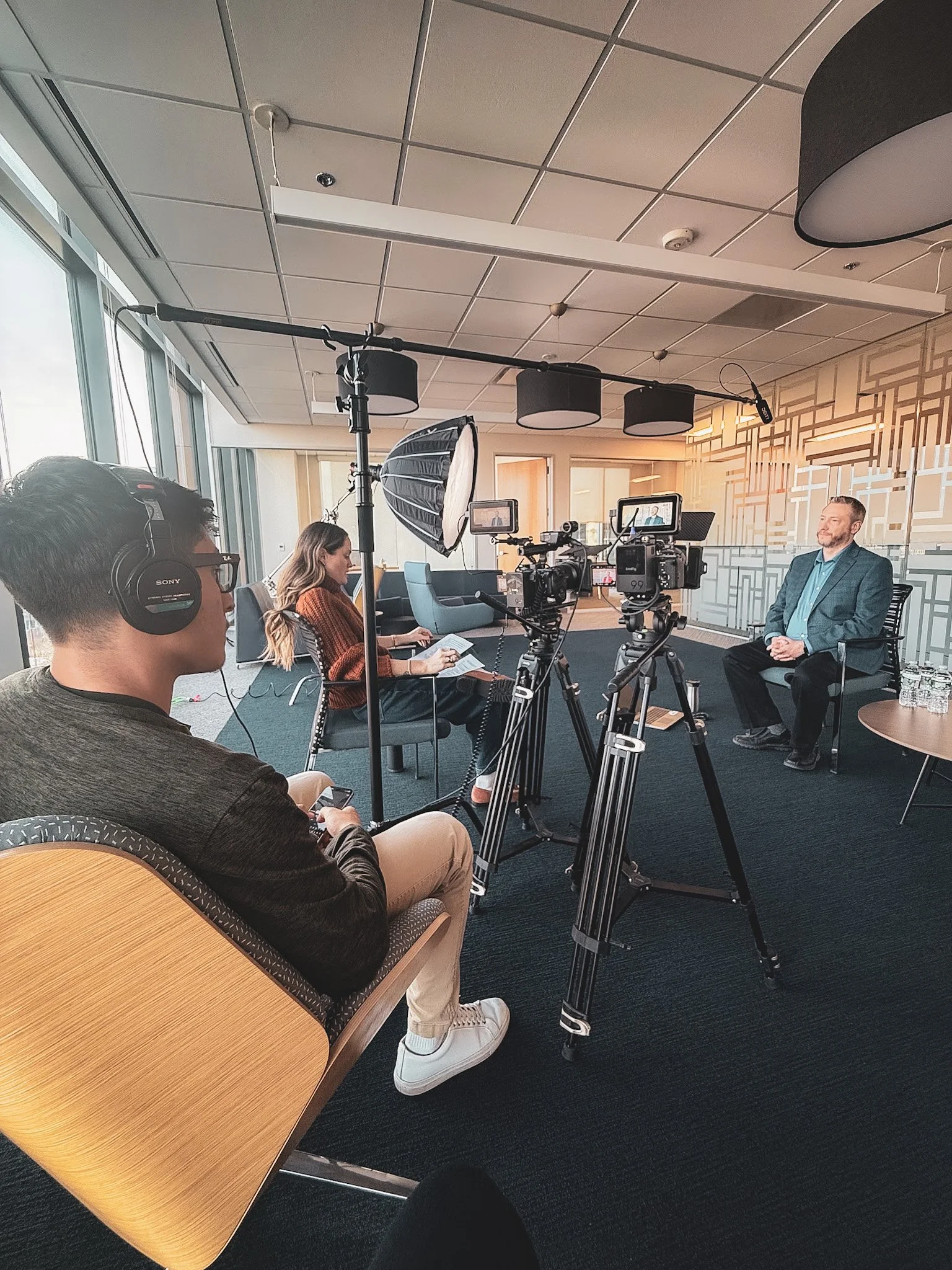
At first, I questioned whether I had charged enough for this shoot. But once the day arrived and it was time to execute, I realized something more important: there were gaps in my workflow that caused a few minor hiccups. Nothing catastrophic—but enough to slow things down and expose areas that need refining.
I took notes in real time so I wouldn’t forget them later.
This blog documents those lessons—not as criticism for the sake of it, but as a way to define what a truly polished, high-end production workflow looks like. Some of these details are essential. Others are “nice-to-haves.” Together, they separate good production from great production.
Quick Take: What This Project Required
Multi-camera corporate interview setup
Long-form recording across six executives
Clean audio in an office environment
Efficient load-in and breakdown
Consistent framing and color across all interviews
At the end of the day, the video delivered. But if I want to confidently offer higher-end service at higher price points, these are the details that need to be fully dialed in.
What a Refined Production Workflow Looks Like
A Director’s Monitor Changes Everything
Right now, I’m mostly judging shots from a small 5-inch external monitor. That’s limiting.
A proper director’s monitor would allow both the director and the client to see the shot clearly in real time. On this shoot alone, there were at least three people—the client, the makeup artist, and myself—who would’ve benefited from seeing the frame live.
One solid viewing solution would’ve elevated the experience. Not three. That would be overkill. But one well-placed monitor creates alignment and eliminates surprises in post.
Yes—we’re the professionals. But it’s still the client’s video. Giving them visibility builds trust.
Matching Camera Bodies (or Truly Dialing Them In)
A CAM
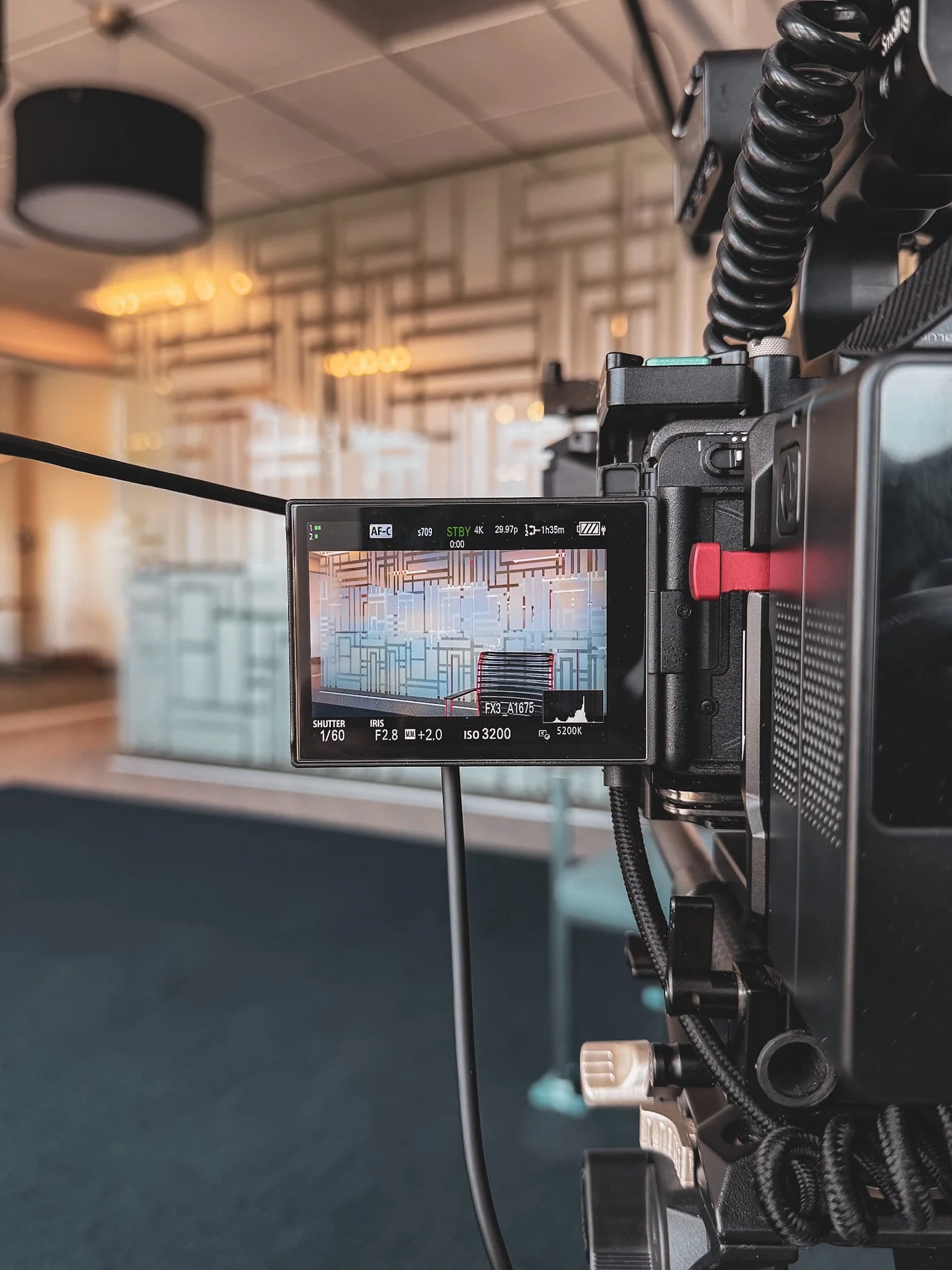
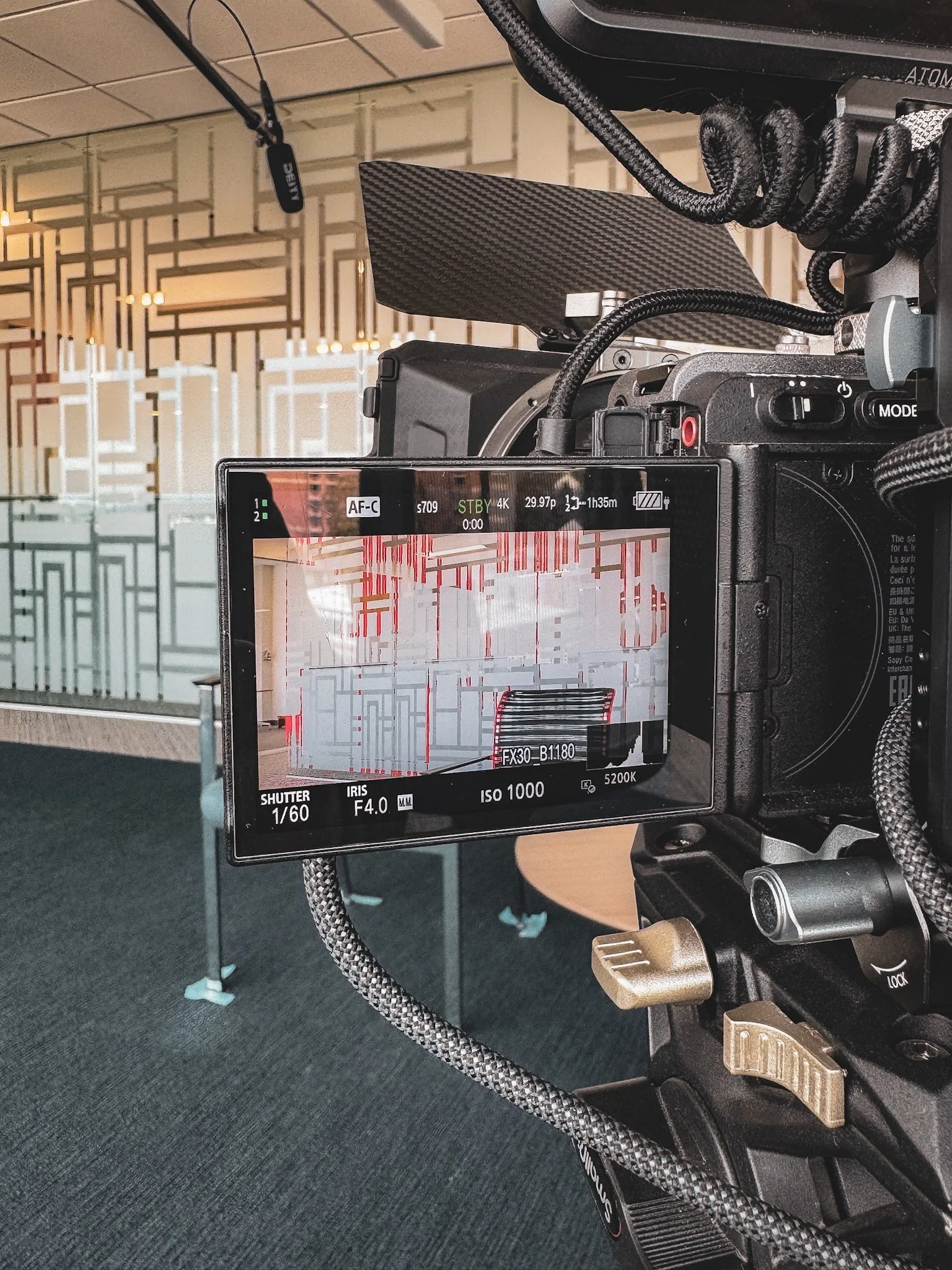
This shoot used a Sony FX3 and an FX30. On paper, they’re close. In practice, they’re not identical—especially when it comes to color.
That difference was amplified by my ND setup:
FX3: fixed ND4
FX30: variable 1–4 ND
The variable ND introduced a noticeably warmer tone. Combined with the natural color differences between the cameras, this created a visible mismatch in post.
Color grading wasn’t as simple as copying and pasting a grade. Each FX30 clip required individual adjustment. That’s extra friction that could’ve been avoided with identical cameras—or more intentional pre-production color matching.
B CAM
Interview Chairs Matter More Than You Think
This feels small. It’s not.
A proper interview chair:
Doesn’t swivel
Isn’t bulky
Doesn’t creep into frame
Swivel chairs invite nervous movement. Armrests become crutches. Standard office chairs are often too large and distracting. In one angle, the corner of the chair was visible in frame—not ideal.
This also exposed another factor I didn’t fully account for: talent size differences. Larger male executives versus smaller female executives affected framing more than expected.
In hindsight, camera height should be set based on the smallest talent first, then adjusted upward as needed.
A Production Cart Is No Longer Optional
This lesson hit immediately.
It was 7am. About 30°F outside. Between me and Tommy from the marketing agency, we made three trips from the car to the location. The parking garage was across the street—but still.
A production cart would’ve saved time, energy, and unnecessary physical strain.
At the end of the shoot, the clients helped carry gear. They shouldn’t have had to do that. That one stung—and it’s on me.
Every shoot before this didn’t require this much gear. That’s a good sign. Productions are growing. But growth comes with growing pains, and this is one that needs to be addressed.
Audio Needs to Be Bulletproof
Audio is one of my weaker areas—and I’m aware of it.
AC noise crept into the mic. It’s fixable in post, but it shouldn’t have happened. I also should’ve lowered the mic slightly to get it closer to the talent instead of increasing sensitivity.
If I want to guarantee higher-end results, audio can’t be something I “handle well enough.” It has to be mastered.
Identical Baseplates Make Multicam Easier
The tripods were the same height. The cameras weren’t.
The issue? Different baseplates. One camera sat higher than the other.
I compensated manually, but with identical baseplates, that adjustment wouldn’t even be a thought. It’s minor—but in multi-camera interviews, small inconsistencies add up quickly.
Interview Direction Is a Skill
On this project, the marketing team did an excellent job. They prepped each executive ahead of time and had talking points dialed in. That preparation made the shoot smooth and efficient.
But if I’m expected to direct interviews myself, I need to come just as prepared—ready to guide conversations or support the interviewer when needed.
That’s a skill set I’m continuing to develop.
Storage Should Never Slow the Shoot
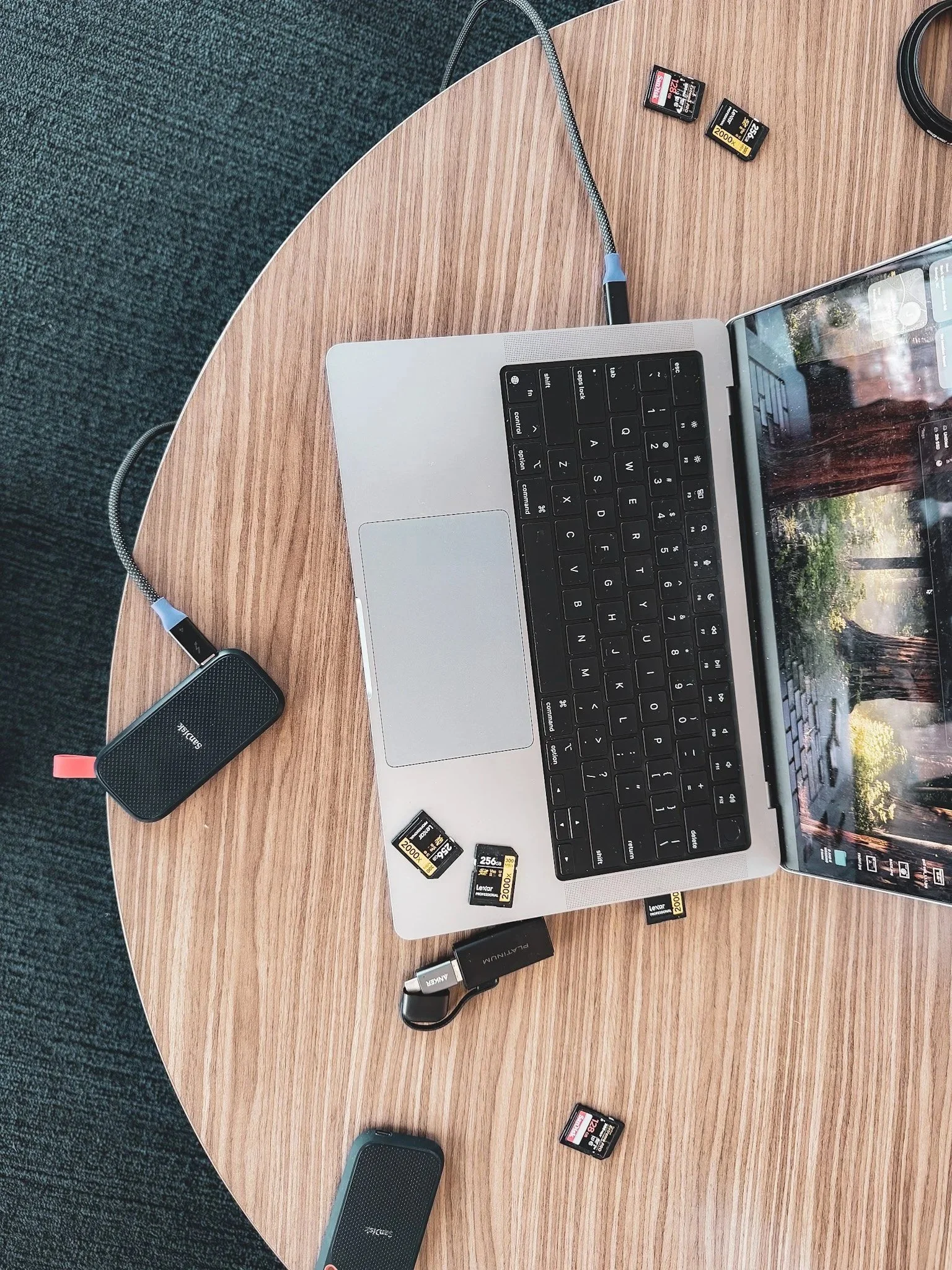
This was the first time I’ve ever run out of storage on a shoot—and it only happened because we were rolling for hours.
Right before the final interview (six total), I had to stop for about ten minutes to offload, back up, and format a card. Not terrible—but not ideal.
Long-term, recording to a large SSD makes more sense than relying solely on SD cards. Larger cards help, but they’re expensive and not necessary for every shoot.
Location Prep Matters—Even When You Get Lucky
I didn’t have the chance to scout this location beforehand. Thankfully, it worked out.
We were shooting in front of a window on an overcast day—soft light, minimal shifts. But luck isn’t a strategy.
Scouting helps anticipate:
Noise issues
Lighting changes
What you can and can’t control
That needs to be part of the process moving forward.
Plan for Glasses Before the First Interview
I didn’t think about glare until the final talent sat down wearing glasses. Depending on how he turned his head, reflections completely blocked his eyes.
A polarizer might help—but adding it only for the final interview would’ve created a noticeable visual difference compared to the others. Repositioning the talent could also help, but again, consistency matters.
This is another example of something that needs to be addressed from the very beginning—not adjusted at the end.
Watch the Background—Especially After Breaks
I didn’t notice until post that background office lights were on in some shots and off in others.
Automatic lighting is the enemy of continuity.
From now on, every light visible in frame needs to stay on from start to finish.
Bring Less Gear Inside—Keep Backups in the Car
I overdid it.
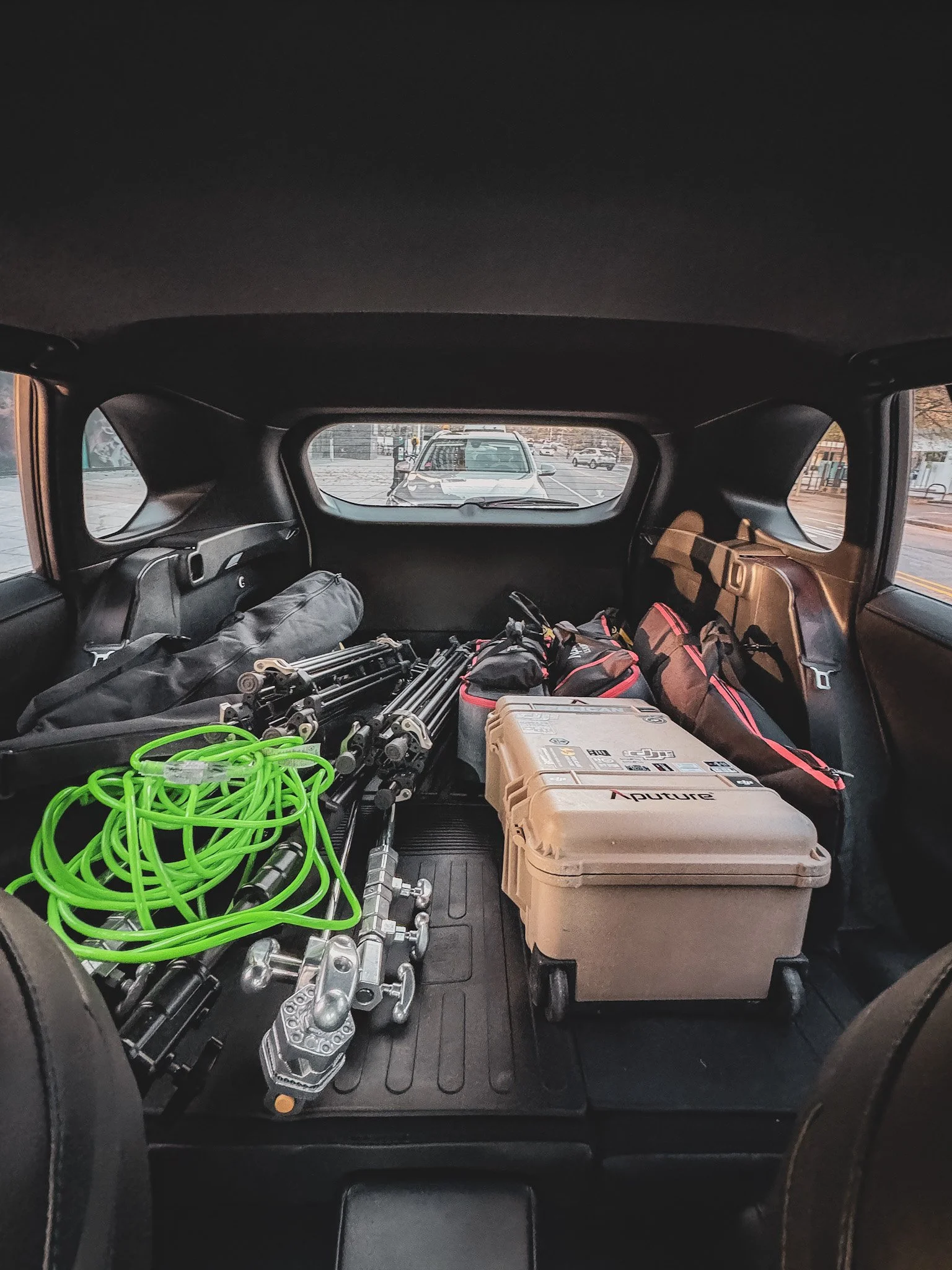
I brought everything inside at once instead of staging gear as needed. That led to unnecessary clutter and extra trips.
Cameras and lenses stay with me. Heavy items—lights, stands, cables, sandbags—can stay in the car until they’re needed.
Final Thoughts
These are the details I need to perfect before confidently offering higher-end professional service at higher price points.
That’s why there are levels to this.
A cheaper production might struggle with audio, batteries, or multicam consistency. A more expensive production would hit every mark—efficient workflow, polished execution, and a better experience for everyone involved.
Perfecting the details doesn’t just improve the final video. It improves the entire production experience—and that’s what separates good work from great work.
If You’re Looking for a Videographer
If you’re a business in Raleigh, NC looking for a videographer who values quality, efficiency, and a smooth client experience, feel free to reach out.
If you’re an upcoming videographer and found this post helpful, I’ll be sharing more in-depth breakdowns like this soon—so you can learn from real-world projects and grow your own production skills.